


How to Choose HRMS Software for a Growing Business in Kerala
As businesses grow, managing employee information, attendance, leave, payroll and HR documentation through spreadsheets and manual processes becomes increasingly difficult. What may work for a small team can quickly become time-consuming and error-prone when the workforce expands across departments or locations.
This is where HRMS software in Kerala can help businesses simplify daily HR operations, improve accuracy and create a more organised employee management process.
However, choosing the right HRMS is not simply about selecting software with the most features. Businesses need a solution that matches their workforce size, operational requirements, budget and future growth plans.
What Is HRMS Software?
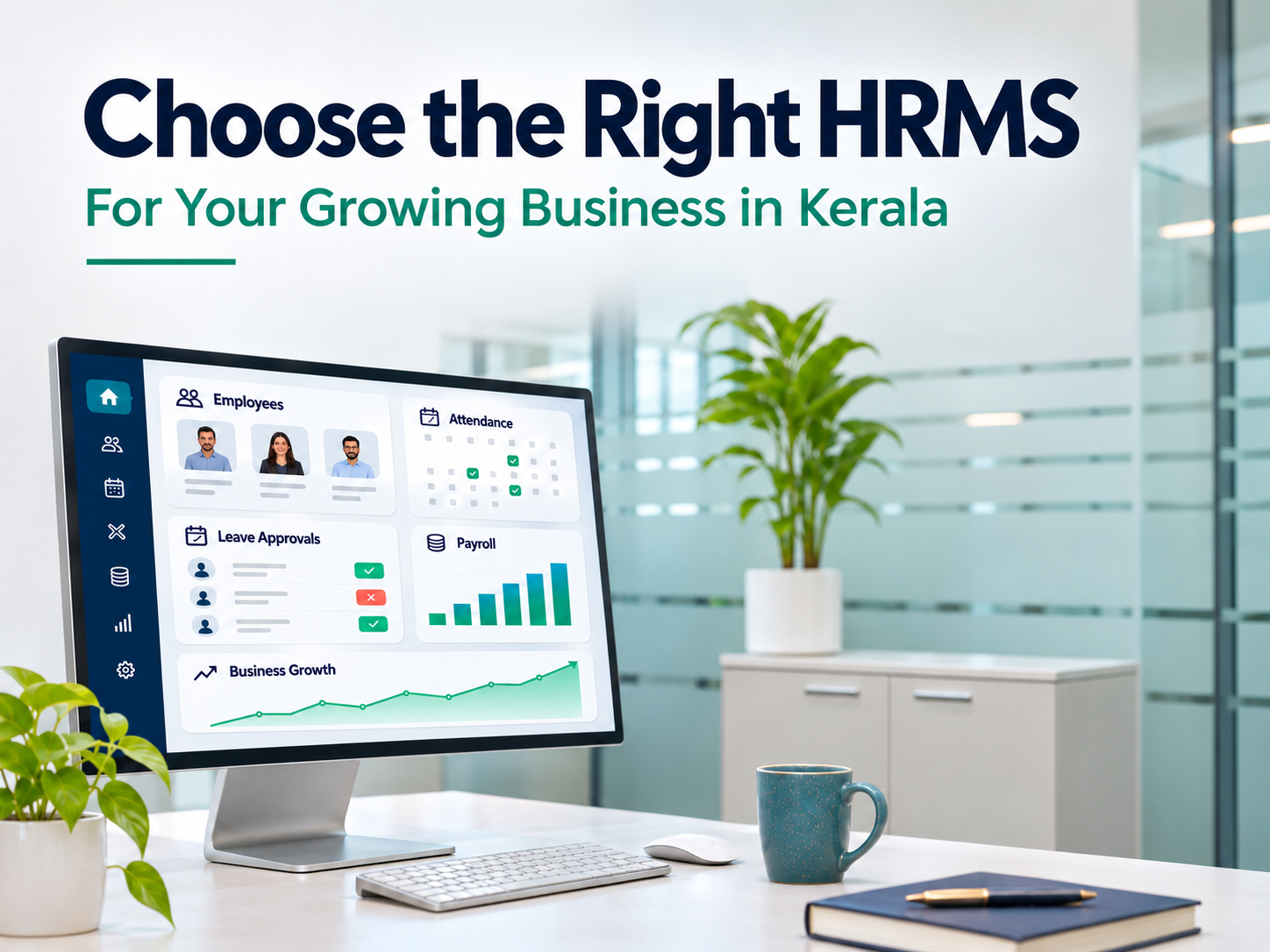
Human Resource Management System (HRMS) software is a digital platform used to manage employee-related processes from a centralised system.
Depending on the solution, an HRMS may include:
- Employee database management
- Attendance tracking
- Leave management
- Payroll processing
- Employee self-service
- Recruitment and onboarding
- Performance management
- HR reports and analytics
- Document and compliance management
Why Growing Businesses Need HRMS Software
As the number of employees increases, HR teams often face several operational challenges.
1. Manual Attendance Tracking
Collecting attendance data from registers, spreadsheets or separate systems can lead to delays and inaccurate records. An HRMS can help centralise attendance information and reduce repetitive data entry.
2. Complicated Leave Management
Without a structured leave management system, employees may depend on emails, messages or verbal requests. HR teams may also find it difficult to track leave balances and approval status.
3. Payroll Errors
Payroll calculations often depend on attendance, overtime, leave deductions, incentives and other employee details. When these inputs are managed manually, even a small error can affect salary processing.
4. Scattered Employee Records
Employee information stored across multiple spreadsheets, folders and email threads can be difficult to update and retrieve. A centralised employee database improves accessibility and organisation.
5. Limited HR Reporting
Business owners and HR managers need accurate information about attendance, employee costs, workforce strength and leave patterns. Manual reporting can consume significant time and may not provide real-time visibility.
Key Factors to Consider When Choosing HRMS Software in Kerala
1. Identify Your HR Requirements
Before comparing HRMS platforms, list the processes your business needs to manage.
Consider whether you require:
- Employee information management
- Attendance and shift tracking
- Leave requests and approvals
- Payroll management
- Employee self-service
- Recruitment and onboarding
- Performance tracking
- Expense or reimbursement management
- HR reports
- Multi-location employee management
A business with 20 employees may have different requirements from a company managing several departments or branches. Choosing software based on actual needs helps avoid unnecessary complexity and cost.
2. Check Attendance and Leave Management Features
Attendance and leave management are essential for most growing businesses.
Look for features such as:
- Daily attendance records
- Shift and work-schedule management
- Late arrival and early departure tracking
- Overtime records
- Leave balance calculation
- Online leave requests
- Approval workflows
- Holiday calendars
- Department-wise attendance reports
The system should make it easier for HR teams to monitor attendance while allowing employees and managers to complete routine tasks without constant manual follow-up.
3. Evaluate Payroll Integration
If payroll is part of your HR process, ensure that the HRMS can use relevant attendance and leave data for salary calculations.
Check whether the system supports:
- Salary structure management
- Attendance-based calculations
- Leave deductions
- Overtime and incentives
- Payslip generation
- Payroll reports
- Employee salary records
- Statutory or compliance-related requirements applicable to your business
4. Look for Employee Self-Service
Employee self-service, commonly known as ESS, allows employees to access or update selected information without depending entirely on the HR department.
Useful ESS features may include:
- Viewing attendance
- Applying for leave
- Checking leave balances
- Downloading payslips
- Updating personal information
- Accessing HR documents
- Tracking request status
This reduces repetitive HR queries and gives employees greater visibility into their own records.
5. Consider Ease of Use
Even a feature-rich HRMS may not deliver value if employees and managers find it difficult to use.
During a demo, evaluate:
- Whether the interface is easy to understand
- How quickly employees can submit requests
- Whether managers can approve tasks easily
- How much training is required
- Whether the software works well on mobile devices
- How clearly reports and dashboards are presented
6. Check Scalability and Multi-Location Support
Growing businesses may expand their workforce, departments, branches or operating locations over time. The HRMS should be able to accommodate this growth without requiring a complete system replacement.
Ask whether the software supports:
- Multiple departments
- Multiple branches or locations
- Different employee roles
- Role-based access
- Custom approval workflows
- Increased employee records
- Flexible reporting structures
For businesses operating across Kerala or other regions, multi-location support can be particularly useful for maintaining consistent HR processes.
7. Review Security and Access Controls
HRMS platforms manage sensitive employee information, including contact details, salary data, identification documents and attendance records.
Before choosing a system, ask about:
- User access permissions
- Role-based access control
- Data backup
- Secure login
- Audit trails
- Data privacy practices
- Document security
- Account recovery procedures
8. Understand Pricing and Implementation Costs
HRMS pricing may depend on the number of employees, modules, users, integrations and support requirements.
When comparing providers, clarify:
- Subscription or licence charges
- Setup and implementation fees
- Employee-based pricing
- Additional module costs
- Training charges
- Support and maintenance fees
- Data migration costs
- Integration charges
The lowest-priced solution may not always be the most suitable if it lacks essential features or requires extensive manual work.
Why Local Business Context Matters
Businesses in Kerala may have different workforce structures, attendance practices and operational requirements depending on their industry. A manufacturing unit, IT company, healthcare organisation, educational institution and retail business may not use HRMS software in the same way.
When evaluating a provider, consider whether the solution can support your industry, employee structure, working schedules and internal approval processes. Local implementation support and responsive customer service may also be important during onboarding and troubleshooting.
How Zitr HRMS Can Support Growing Businesses
Businesses looking for a structured employee management platform can explore Zitr HRMS, part of the Zitr business software ecosystem from GKS Infotech.
Depending on the modules and configuration selected, an HRMS solution can help bring employee records, attendance, leave, payroll-related processes and HR reporting into a more organised workflow.
Before making a decision, businesses should request a product demonstration to understand the available features, implementation process, integrations and suitability for their specific requirements.
Final Thoughts
Choosing the right HRMS software in Kerala requires more than comparing feature lists. Businesses should evaluate their current HR challenges, employee size, payroll requirements, ease of use, security, scalability and long-term support.
A suitable HRMS can reduce repetitive administrative work, improve employee data accuracy, simplify attendance and leave management, and give business leaders better visibility into workforce operations.
Ready to streamline your HR processes? Explore how Zitr HRMS can support your employee management requirements. Contact GKS Infotech to discuss your business needs and request a personalised demo.
FAQs
1. What is HRMS software used for?
HRMS software is used to manage employee records, attendance, leave, payroll, HR documents, employee requests and workforce reports through a centralised platform.
2. How do I choose HRMS software for a small business?
Start by identifying your essential requirements, such as employee records, attendance, leave and payroll. Choose a system that is easy to use, scalable, secure and within your budget.
3. Can HRMS software manage employees across multiple locations?
Many HRMS platforms support multiple branches, departments, employee roles and location-based reporting. Businesses should confirm these capabilities with the provider before purchasing.
4. Is HRMS software suitable for growing businesses in Kerala?
Yes. HRMS software can help growing businesses in Kerala organise employee data, automate routine HR tasks and manage workforce processes more efficiently as the organisation expands.