

Asset Management Software Kerala: A Complete Guide for Businesses
Managing business assets becomes more challenging as an organisation grows. Laptops may be assigned to employees, machinery may operate across production sites, and office equipment may move between departments or branches. When these assets are tracked through spreadsheets or manual registers, businesses can struggle to identify their location, ownership, condition, and maintenance requirements.
For businesses in Kerala, asset management software can provide a more organised way to manage these responsibilities. Whether you operate an IT company in Kochi, a manufacturing unit in Thrissur, a healthcare facility in Kozhikode, or a multi-location business across Kerala, a centralised asset management system can help improve visibility and accountability.
But what exactly does asset management involve, and how does software support it?
What Is Asset Management?
Asset management is the process of tracking, managing, maintaining, and optimising an organisation’s physical, fixed, and IT assets throughout their lifecycle.
This lifecycle begins with acquisition and may include registration, allocation, usage, maintenance, repair, valuation, and eventual disposal.
Business assets can include:
- Laptops, servers, and other IT equipment
- Office furniture and electrical equipment
- Manufacturing machinery and tools
- Vehicles and mobile equipment
- Medical and technical equipment
- Software licences and other digital assets
Why Do Businesses Need Asset Management Software?
Many organisations begin with Excel spreadsheets or manual asset registers. These may be suitable for a small number of assets, but they become harder to maintain as the business expands.
Common challenges include:
- Missing or misplaced assets
- Duplicate or outdated records
- Difficulty tracking asset ownership
- Manual maintenance scheduling
- Expired warranties and AMCs
- Limited visibility across locations
- Time-consuming audits
- Inaccurate valuation records
Asset management software helps centralise this information and provides a structured system for tracking assets throughout their lifecycle.
Asset Management vs Inventory Management
Asset management and inventory management are related, but they serve different purposes.
|
Asset Management |
Inventory Management |
|
|
|
|
|
|
|
|
How Does Asset Management Software Work?
A typical asset management system supports several important stages.
Asset Registration and Identification
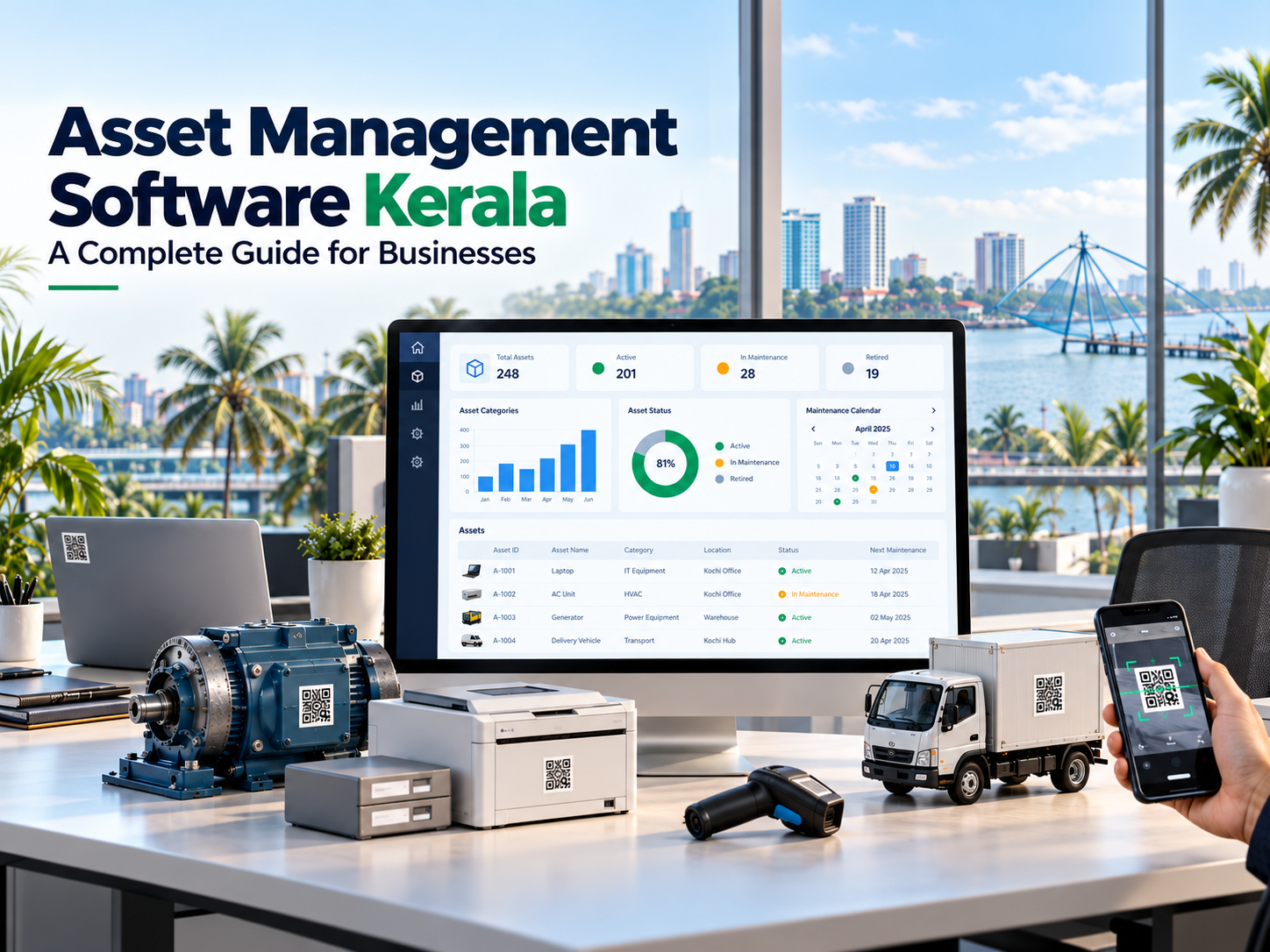
Businesses can create a centralised asset register containing details such as asset name, category, serial number, purchase date, value, and location.
QR codes and barcodes can help employees identify assets quickly and access their records through scanning.
Allocation and Accountability
Asset allocation records can show which employee, department, or location is responsible for an asset. This is useful when equipment is transferred, returned, or reassigned.
Maintenance and Warranty Tracking
Businesses can monitor maintenance schedules, service history, AMC details, and warranty expiry dates. Preventive maintenance planning can help reduce avoidable breakdowns and improve asset availability.
Lifecycle and Valuation Management
Asset lifecycle management follows an asset from acquisition through active service, repair, and disposal. Depreciation and valuation records can also support financial reporting and replacement decisions.
Key Features to Look for in Asset Management Software
When evaluating asset management software in Kerala, businesses should consider capabilities such as:
- Centralised asset register
- QR code and barcode tracking
- Asset allocation and transfer records
- Multi-location asset management
- Maintenance scheduling
- AMC and warranty tracking
- Depreciation and valuation reports
- Custom asset categories and fields
- Audit trails and user permissions
- Reporting and dashboards
Zitr Assets by GKS Infotech
GKS Infotech offers Zitr Assets, an enterprise asset management solution designed to help businesses track, manage, and maintain physical and digital assets.
Its verified capabilities include QR code and barcode tracking, asset allocation, end-to-end lifecycle management, maintenance scheduling, AMC and warranty tracking, and depreciation calculations. The platform also supports custom asset categories and a unified ledger for IT and non-IT assets.
Zitr Assets includes features such as asset issue reporting, repair ticket management, spare-parts tracking, and vendor SLA management. Its industry use cases cover IT hardware, industrial machinery, healthcare equipment, and educational assets.
For organisations looking to move beyond spreadsheets and manual registers, these capabilities can support more structured asset tracking, maintenance, and accountability.
Why Consider Asset Management Software in Kerala?
Businesses operating across Kerala may manage assets across offices, branches, campuses, factories, or project locations. A centralised asset management system can help them:
- Improve visibility into asset ownership and location
- Reduce manual tracking and audit effort
- Monitor AMC and warranty renewals
- Support preventive maintenance planning
- Maintain more organised valuation records
- Improve accountability during asset transfers
Conclusion
Asset management is essential for businesses that want better control over their equipment, resources, and operational investments. While spreadsheets may work for basic records, growing organisations often need a more structured approach to tracking assets, managing maintenance, and maintaining accountability.
Asset management software in Kerala can help businesses centralise asset information, simplify audits, monitor maintenance, and manage the complete asset lifecycle.
GKS Infotech’s Zitr Assets provides a platform designed to support enterprise asset tracking and management.
Ready to Improve Your Asset Management Process?
Explore how Zitr Assets can help your business manage assets more efficiently. Contact GKS Infotech to discuss your asset tracking, maintenance, and lifecycle management requirements.
Frequently Asked Questions
1. What is asset management software?
Asset management software is a system used to track, manage, maintain, and monitor business assets throughout their lifecycle. It can include asset registration, allocation, tracking, maintenance, depreciation, and reporting.
2. Is asset management software useful for small businesses?
Yes. Small businesses can benefit from asset management software when they need to track equipment, assign assets to employees, manage maintenance, or maintain accurate records across multiple locations.
3. What is the difference between asset management and inventory management?
Asset management focuses on the ownership, usage, maintenance, and lifecycle of valuable assets. Inventory management focuses mainly on stock quantities, movement, purchasing, and replenishment.
4. What should businesses consider when choosing asset management software in Kerala?
Businesses should consider asset tracking methods, multi-location support, maintenance management, AMC and warranty tracking, reporting, user permissions, scalability, and whether the software supports their specific asset categories.