


How to Prevent Ransomware Attacks in Kerala: Complete Business Protection (2026)
Cyberattacks are no longer a concern only for large multinational organizations. Today, businesses across Kerala including hospitals, banks, manufacturing companies, educational institutions, retail businesses, and SMEs are increasingly becoming targets of ransomware attacks. A single successful attack can encrypt critical business data, disrupt operations, damage customer trust, and lead to significant financial losses. Investing in ransomware protection Kerala solutions is no longer optional; it is a fundamental part of business continuity and cybersecurity. This guide explains how ransomware works, why organizations in Kerala are at risk, and the practical steps businesses can take to strengthen their cyber resilience.
- Ransomware attacks are increasing across businesses of all sizes in Kerala.
- Prevention through layered cybersecurity is far more effective than paying a ransom.
- Employee awareness, secure backups, endpoint protection, and network monitoring significantly reduce risk.
- Healthcare, banking, manufacturing, and SMEs are among the most targeted sectors.
- Partnering with an experienced cybersecurity provider helps businesses detect, prevent, and recover from ransomware threats.
What Is Ransomware and Why Should Businesses in Kerala Be Concerned?
Ransomware is malicious software that encrypts files, databases, or entire systems, preventing organizations from accessing their data until a ransom is demanded. Modern ransomware attacks often include data theft, where attackers threaten to publish confidential information if payment is not made.
Businesses in Kerala are becoming attractive targets because many organizations are rapidly adopting cloud technologies, remote work environments, and digital operations while cybersecurity maturity varies considerably. Even a small business can become a target if attackers identify outdated software, weak passwords, or vulnerable networks.
For industries that rely on uninterrupted operations, even a few hours of downtime can result in significant operational and financial consequences.
Which Industries in Kerala Face the Highest Ransomware Risk?
Healthcare and Hospitals
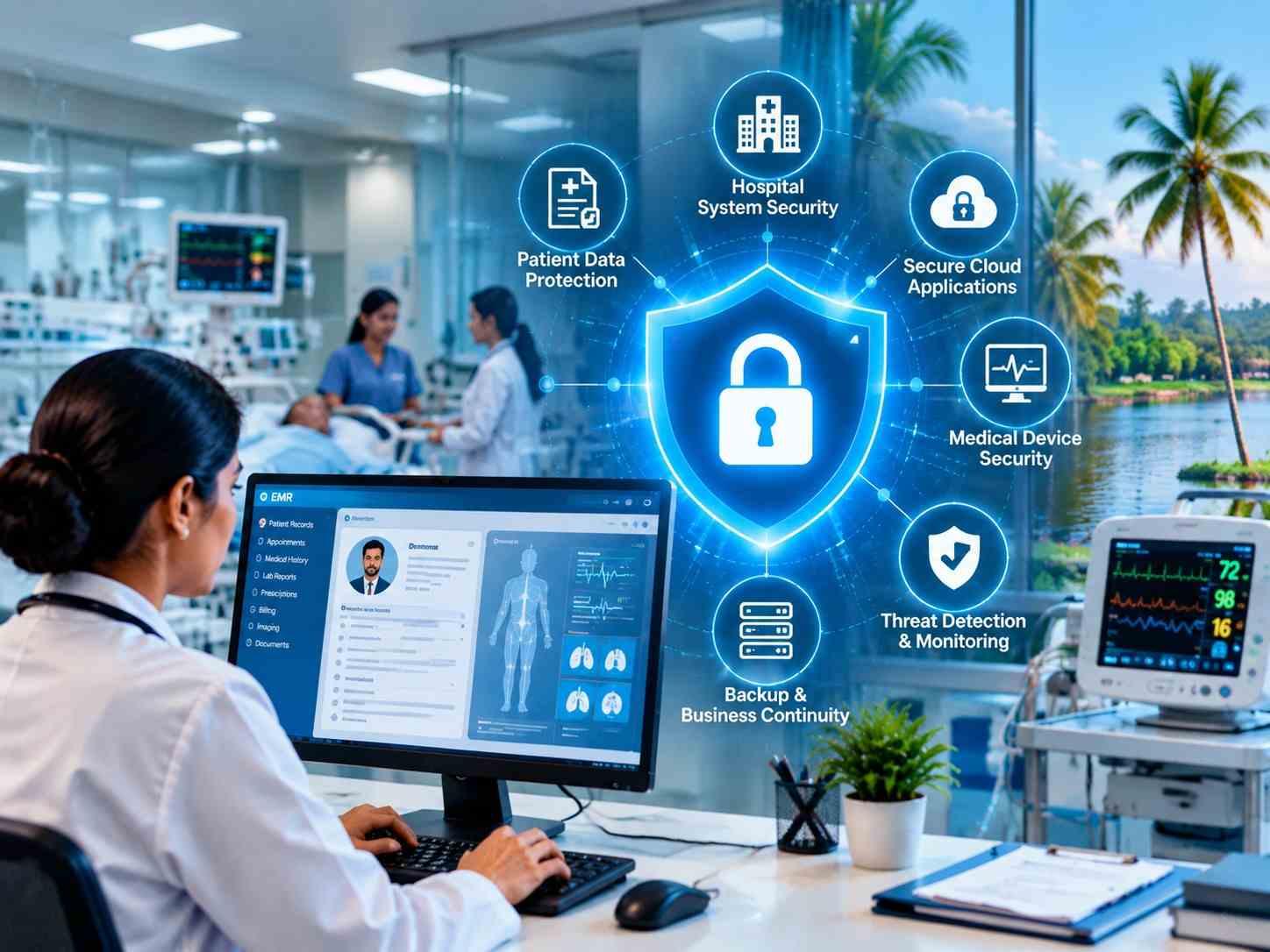
Hospitals manage sensitive patient records and critical healthcare systems that require continuous availability. A ransomware incident can interrupt patient care, delay treatments, and compromise confidential medical information.
Healthcare organizations should prioritize:
- Network segmentation
- Continuous endpoint monitoring
- Secure patient data backups
- Multi-factor authentication
- Regular vulnerability assessments
Banking and Financial Institutions
Financial organizations process highly valuable customer information and financial transactions. Cybercriminals often target these institutions because operational disruption creates pressure to restore systems quickly.
Recommended security measures include:
- Zero Trust security architecture
- Security Information and Event Management (SIEM)
- Continuous security monitoring
- Privileged access management
- Advanced email security
Small and Medium Businesses
Many SMEs assume they are too small to become ransomware targets. In reality, attackers frequently exploit businesses with limited cybersecurity resources because they often have weaker defenses.
SMEs should focus on affordable, layered protection strategies rather than relying on a single antivirus solution.
Manufacturing and Industrial Companies
Manufacturing organizations increasingly depend on connected systems, automation, and digital production environments. A ransomware attack can halt production lines and delay customer deliveries.
Operational Technology (OT) security should be integrated with traditional IT security to reduce risk.
How Do Ransomware Attacks Usually Begin?
Most ransomware incidents begin with one or more common attack vectors.
Phishing Emails
Employees receive convincing emails containing malicious links or attachments that install ransomware after being opened.
Weak Passwords
Compromised credentials provide attackers with direct access to business systems.
Outdated Software
Unpatched operating systems and applications often contain known vulnerabilities that attackers exploit.
Remote Desktop Exposure
Poorly secured remote access services remain one of the leading causes of ransomware incidents.
Third-Party Vulnerabilities
Attackers may compromise suppliers or software providers to reach multiple organizations through trusted relationships.
What Are the Warning Signs of a Ransomware Attack?
Early detection can significantly reduce the impact of an attack.
Common indicators include:
- Unexpected file encryption
- Files becoming inaccessible
- Unusual network activity
- Unknown administrator accounts
- Disabled antivirus software
- Suspicious login attempts
- Ransom notes appearing on systems
- Significant slowdown in system performance
Organizations should establish monitoring systems capable of identifying these indicators before widespread encryption occurs.
Why Is Ransomware Protection Important for Businesses in Kochi and Kerala?
As businesses across Kochi and Kerala continue to adopt cloud computing, digital payments, remote work, and connected business systems, the risk of ransomware attacks has increased significantly. Cybercriminals increasingly target organizations of all sizes including hospitals, banks, manufacturers, educational institutions, and small businesses because disrupting critical operations can pressure victims into paying a ransom.
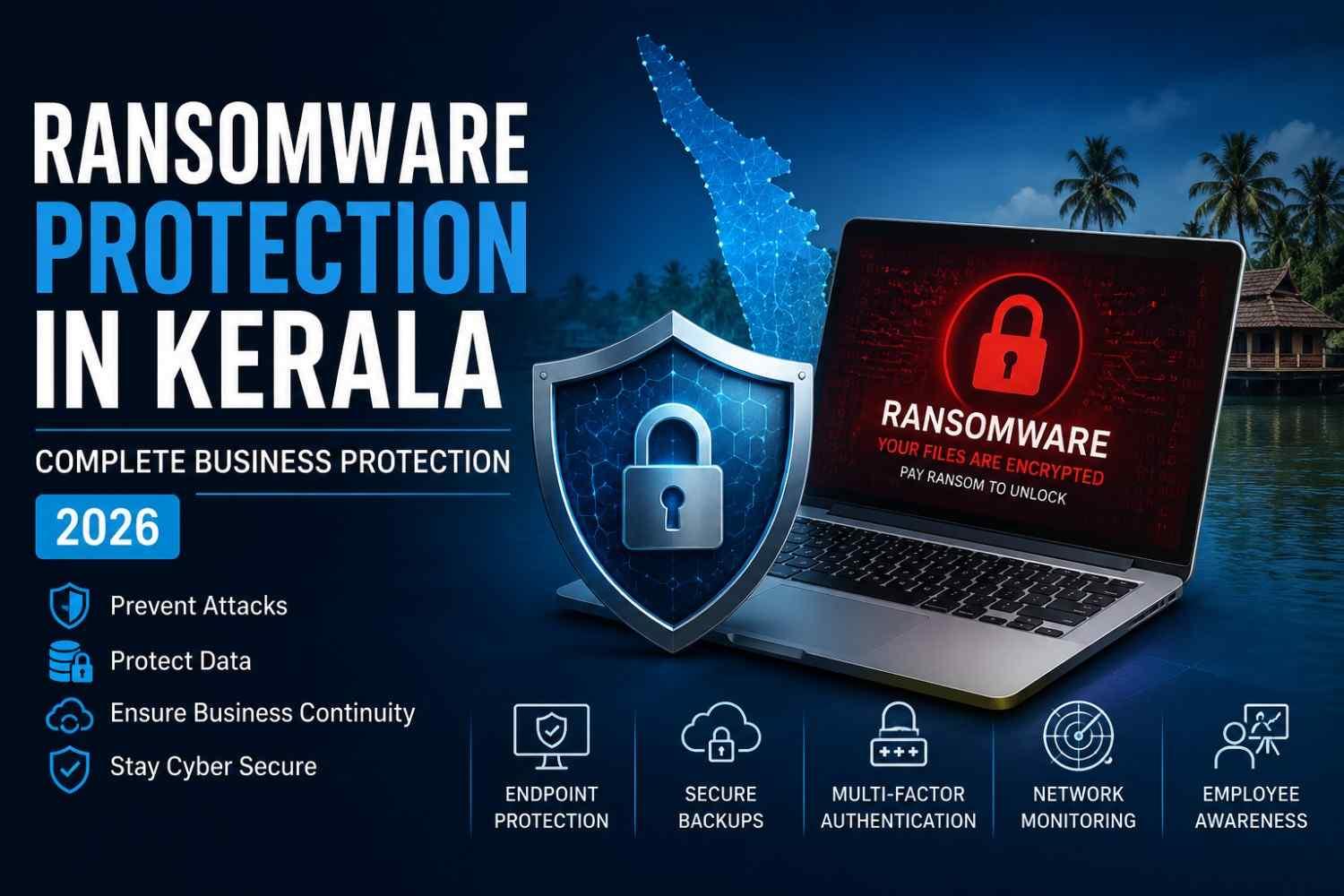
Implementing ransomware protection in Kerala involves more than installing antivirus software. Businesses should adopt a layered cybersecurity strategy that includes endpoint protection, regular data backups, employee security awareness training, multi-factor authentication (MFA), network monitoring, and vulnerability management. Working with an experienced cyber security company in Kerala can help organizations strengthen their defenses through proactive ransomware prevention, continuous monitoring, incident response planning, and managed security services that reduce cyber risks before they impact business operations.
How Can Businesses Strengthen Ransomware Protection?
Implement a Multi-Layered Security Strategy
Effective ransomware protection in Kerala requires a layered cybersecurity approach rather than relying on a single security solution. Modern ransomware attacks can bypass traditional antivirus software, making it essential to combine multiple security controls that work together to detect, prevent, and respond to cyber threats.
A comprehensive ransomware protection strategy should include:
- Next-generation firewalls
- Endpoint Detection and Response (EDR)
- Managed Detection and Response (MDR)
- Advanced email security
- DNS filtering
- Identity and Access Management (IAM)
- Multi-Factor Authentication (MFA)
- Security Operations Center (SOC) monitoring
- Network security solutions
- Cloud security protection
- Data Loss Prevention (DLP)
Each layer plays a critical role in reducing the attack surface and preventing ransomware from spreading across business systems. Organizations that implement multiple security controls are better equipped to identify suspicious activity early and respond before significant damage occurs.
In addition, regular IT infrastructure management, vulnerability assessments, patch management, and proactive system monitoring help eliminate known security weaknesses before attackers can exploit them. Businesses that combine these best practices with managed IT services in Kerala can significantly strengthen their cybersecurity posture and improve long-term resilience against evolving ransomware threats.
Maintain Secure Offline Backups
Backups remain one of the most effective defenses against ransomware.
Best practices include:
- Maintain multiple backup copies.
- Store at least one offline or immutable backup.
- Test restoration regularly.
- Encrypt backup data.
- Separate backup credentials from production systems.
Reliable backups enable faster recovery without relying on attackers.
Keep Systems Updated
Cybercriminals often exploit known software vulnerabilities that have already been patched by vendors.
Businesses should establish a structured patch management process covering:
- Operating systems
- Business applications
- Firewalls
- Servers
- Cloud platforms
- Network devices
Regular IT infrastructure management, vulnerability assessments, and patch management help eliminate known security weaknesses before attackers can exploit them. Businesses that combine proactive maintenance with managed IT services in Kerala significantly improve their cybersecurity posture.
Train Employees to Recognize Cyber Threats
Technology alone cannot stop every attack.
Employees should understand:
- Phishing identification
- Safe email practices
- Password security
- Social engineering techniques
- Secure file sharing
- Incident reporting procedures
Why Businesses Should Take Ransomware Seriously
- Ransomware attacks continue to target organizations of every size.
- Healthcare, banking, manufacturing, education, and SMEs remain frequent targets.
- Business downtime often costs significantly more than the ransom itself.
- Recovery may take days or even weeks depending on backup readiness.
Why Is Endpoint Detection and Response (EDR) Important?
Traditional antivirus software primarily detects known malware signatures.
Modern ransomware frequently uses sophisticated techniques designed to bypass legacy antivirus solutions.
Endpoint Detection and Response (EDR) provides:
- Real-time monitoring
- Behavioral analysis
- Threat isolation
- Automated response
- Incident investigation
- Continuous endpoint visibility
How Does Cloud Security Help Prevent Ransomware?
As more organizations migrate workloads to cloud environments, cloud security has become a critical component of ransomware protection.
Effective cloud security includes:
- Identity and access management
- Multi-factor authentication
- Cloud workload protection
- Secure backup solutions
- Access logging
- Configuration monitoring
Businesses using Microsoft 365, Google Workspace, or hybrid cloud environments should ensure cloud platforms are configured according to security best practices.
Why Choose a Cyber Security Company in Kerala for Ransomware Protection?
Working with an experienced cyber security company in Kerala provides access to cybersecurity consulting, managed IT services, endpoint security, network monitoring, cloud consulting, and rapid incident response. Rather than reacting to cyberattacks, businesses can proactively strengthen their defenses through continuous security management and expert guidance.
Why Is Managed Cybersecurity Becoming Essential for Businesses in Kerala?
Many organizations cannot maintain a dedicated cybersecurity team operating around the clock.
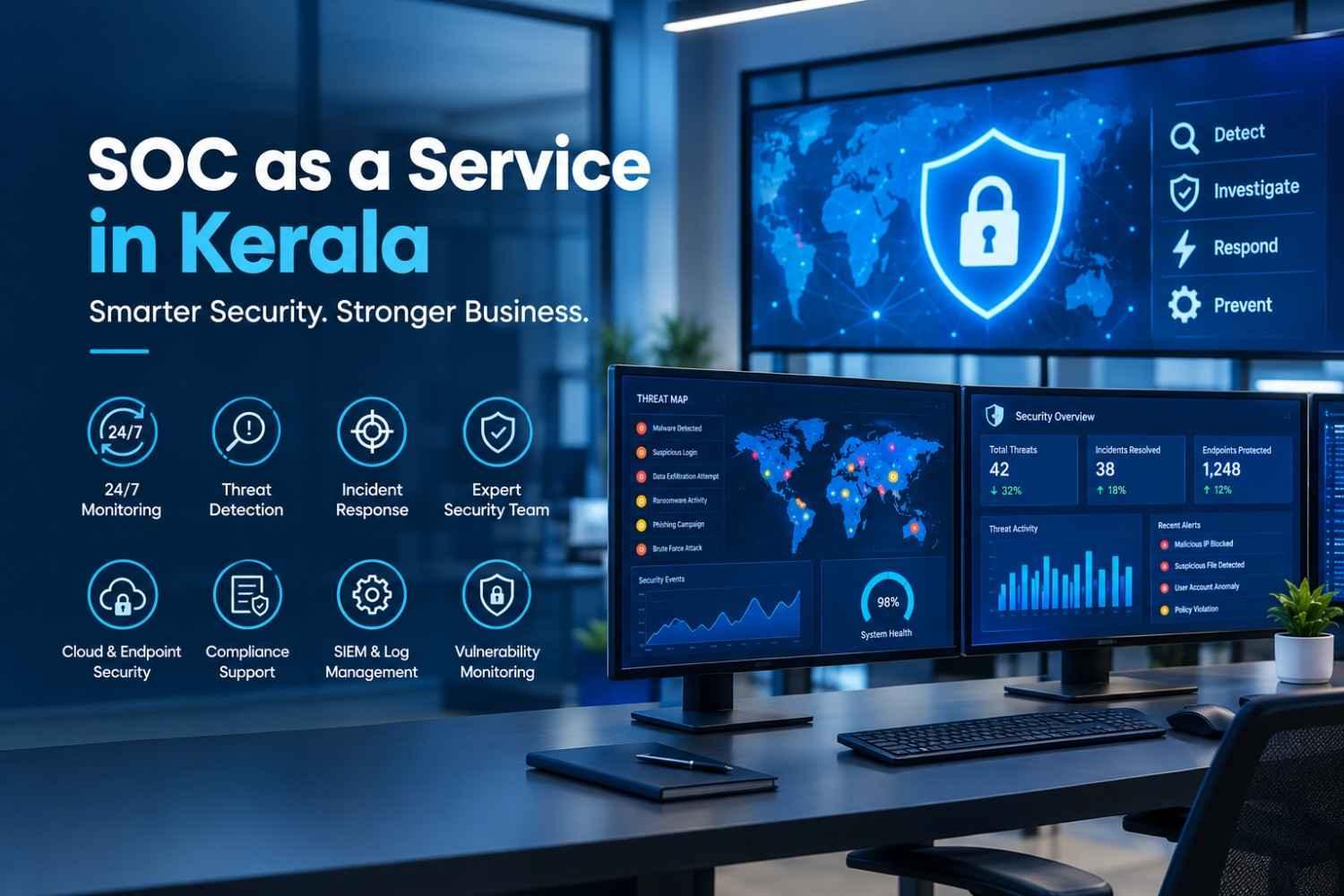
Managed cybersecurity services provide access to experienced security professionals who continuously monitor business environments, identify threats, and respond quickly to security incidents.
Typical managed services include:
- 24/7 security monitoring
- Threat detection
- Vulnerability management
- Security assessments
- Firewall management
- Endpoint security
- Security reporting
- Incident response assistance
What Should a Business Do Immediately After a Ransomware Attack?
A rapid response can minimize operational disruption.
Recommended actions include:
- Disconnect affected systems from the network.
- Preserve evidence for investigation.
- Notify internal IT and security teams.
- Activate the incident response plan.
- Restore systems only from verified clean backups.
- Conduct a root cause analysis.
- Strengthen security controls before reconnecting systems.
Organizations should avoid making recovery decisions without professional cybersecurity guidance.
Best Practices for Long-Term Ransomware Protection
To build long-term cyber resilience, organizations should:
- Perform regular vulnerability assessments.
- Conduct penetration testing.
- Enable multi-factor authentication.
- Enforce least-privilege access.
- Segment business networks.
- Monitor security logs continuously.
- Maintain disaster recovery plans.
- Review backup strategies regularly.
- Perform periodic cybersecurity audits.
- Update incident response procedures.
Cybersecurity is an ongoing process rather than a one-time implementation.
Why Choose a Professional Cybersecurity Partner?
Protecting business-critical systems requires expertise, continuous monitoring, and proactive security management.
An experienced cybersecurity partner can help organizations:
- Identify security gaps
- Improve compliance
- Strengthen cloud security
- Protect endpoints
- Secure business networks
- Respond quickly to incidents
- Build long-term cyber resilience
Whether you operate a hospital, financial institution, manufacturing company, educational organization, or growing SME, professional cybersecurity support helps reduce risk while improving business continuity.
Conclusion
Ransomware attacks are becoming more sophisticated, making proactive cybersecurity a critical investment for businesses across Kerala. By implementing a layered security strategy, maintaining secure backups, keeping systems updated, and training employees to recognize cyber threats, organizations can significantly reduce their risk of data breaches, operational downtime, and financial loss. Building cyber resilience is no longer just an IT priority it's an essential part of protecting business continuity and customer trust.
Whether you're a hospital, financial institution, manufacturing company, educational organization, or growing SME, partnering with an experienced cybersecurity provider can help you stay ahead of evolving threats. GKS Infotech delivers comprehensive ransomware protection in Kerala through managed IT services, cloud consulting, endpoint security, network protection, backup and disaster recovery, and proactive cybersecurity solutions tailored to your business needs. Contact our team to strengthen your organization's cyber defenses and ensure a secure, resilient future.
FAQs
What is ransomware protection for businesses?
Ransomware protection combines security technologies, monitoring, employee awareness, and backups to prevent, detect, and recover from ransomware attacks.
Is antivirus software enough to stop ransomware?
No. Modern ransomware requires layered security including endpoint detection, secure backups, employee training, and continuous monitoring.
Which businesses are most vulnerable to ransomware?
Hospitals, banks, manufacturers, educational institutions, retailers, and small businesses frequently experience ransomware attacks due to valuable data and operational dependence.
How often should businesses perform cybersecurity assessments?
Most organizations should perform vulnerability assessments regularly and conduct comprehensive security reviews at least annually or after significant infrastructure changes.
Can cloud-based businesses still experience ransomware attacks?
Yes. Cloud environments require proper identity management, backup strategies, access controls, and continuous monitoring to reduce ransomware risks.