


Healthcare Cybersecurity in Kerala: Risks, Solutions & Best Practices for 2026
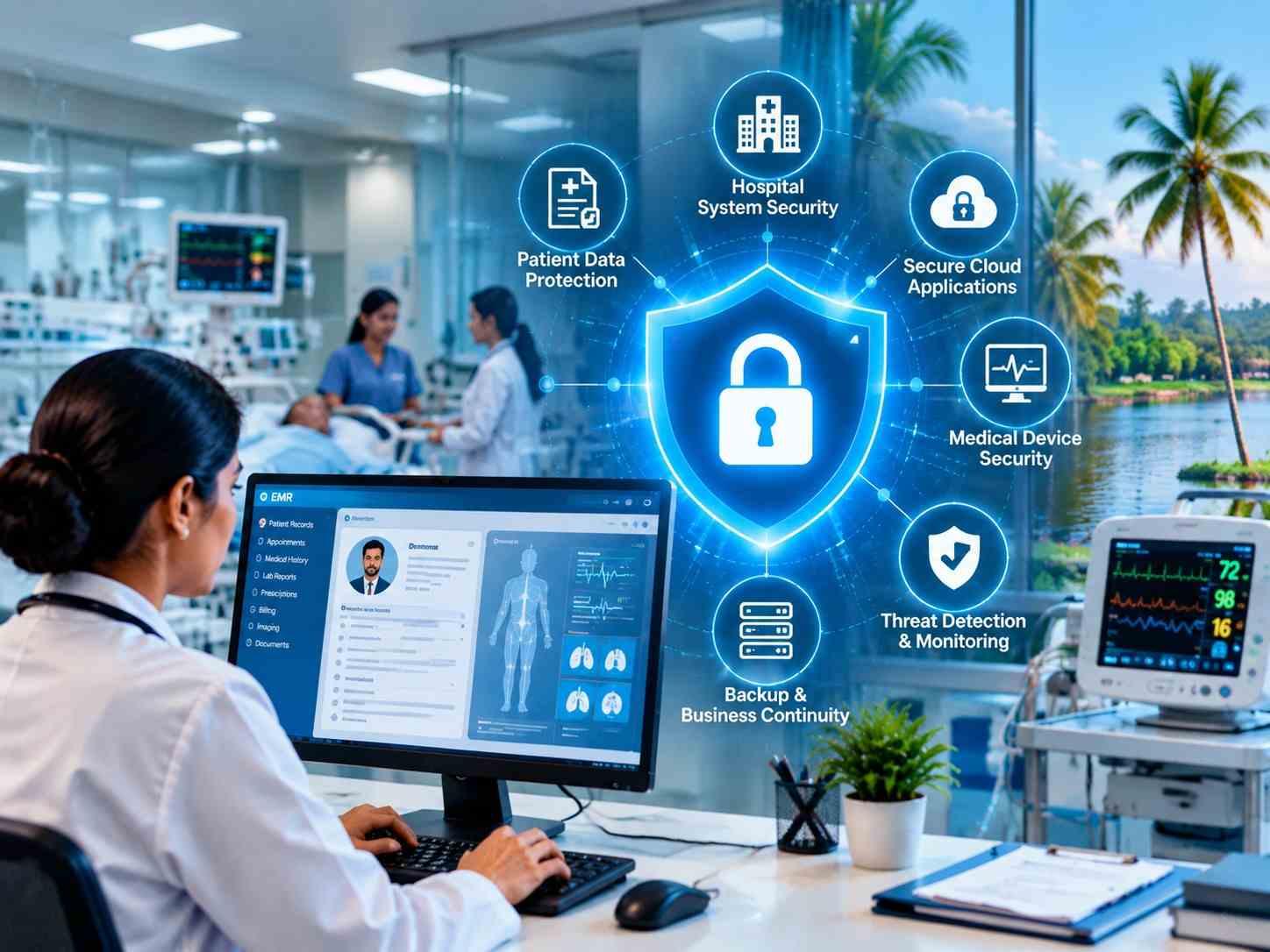
Healthcare organisations across Kerala are increasingly adopting digital technologies such as Electronic Medical Records (EMR), Hospital Information Systems (HIS), telemedicine platforms, cloud applications and connected medical devices.
While digital transformation improves healthcare operations, it also creates new cybersecurity risks. Hospitals, clinics and diagnostic centres manage sensitive patient information, making them potential targets for ransomware, phishing, data breaches and unauthorised access.
For healthcare providers, healthcare cybersecurity in Kerala is therefore an important part of protecting patient information, securing digital infrastructure and maintaining business continuity.
What Is Healthcare Cybersecurity?
Healthcare cybersecurity refers to the technologies, processes and security practices used to protect healthcare systems, networks, applications, medical devices and patient information from cyber threats.
A strong cybersecurity strategy can help organisations:
- Protect EMR, EHR and HIS systems
- Secure patient databases and healthcare applications
- Prevent unauthorised access
- Protect cloud and remote-access environments
- Identify vulnerabilities and security risks
- Improve incident response and recovery
- Strengthen business continuity
Cybersecurity is not only about protecting technology. It also supports patient privacy, operational continuity and organisational resilience.
Why Healthcare Organisations in Kerala Need Cybersecurity
Healthcare organisations across Kerala increasingly depend on digital systems for patient records, appointments, diagnostics, communication and daily operations.
A cybersecurity incident can potentially cause:
- Exposure of confidential patient information
- Disruption of healthcare operations
- Loss of access to critical systems
- Financial and operational losses
- Data protection challenges
- Reduced patient trust
Common Cybersecurity Threats in Healthcare
Ransomware
Ransomware can restrict access to files, applications or systems by encrypting data or disrupting infrastructure. Secure backups, endpoint protection, access controls and incident response planning can help reduce its potential impact.
Phishing and Social Engineering
Fake emails, messages and login pages can be used to steal employee credentials. Regular cybersecurity awareness training and Multi-Factor Authentication (MFA) can help reduce these risks.
Medical Device Security
Connected medical and diagnostic devices can introduce additional security risks if they are outdated, poorly configured or inadequately protected. Device updates, network segmentation, access controls and monitoring can improve security.
Cloud Security
Cloud applications and storage are increasingly used by healthcare organisations. Weak credentials, excessive permissions and incorrect configurations can increase the risk of unauthorised access. Regular cloud security reviews and appropriate access controls are important.
Insider and Third-Party Risks
Accidental data exposure, excessive user permissions, compromised accounts and third-party access can also create vulnerabilities. Role-based access and regular permission reviews can help reduce these risks.
Essential Cybersecurity Solutions for Hospitals
A layered healthcare cybersecurity strategy can include:
Cybersecurity Risk Assessment
Risk assessments help organisations identify weaknesses across networks, applications, devices and security processes and prioritise improvements.
VAPT
Vulnerability Assessment and Penetration Testing (VAPT) helps identify security weaknesses before they are exploited. Testing can cover websites, applications, networks and relevant cloud environments.
Network and Endpoint Security
Firewalls, secure remote access, network segmentation and endpoint protection can help protect healthcare infrastructure from unauthorised access and malicious activity.
Multi-Factor Authentication
MFA adds an additional verification layer and can help protect administrative accounts, cloud applications and remote access.
Backup and Disaster Recovery
Secure and tested backups are important for business continuity and ransomware preparedness. Healthcare organisations should regularly verify that critical systems and information can be restored.
Security Monitoring
Security monitoring can help identify suspicious activity across networks, endpoints, cloud systems and authentication environments. An incident response plan can help organisations respond effectively to security incidents.
Healthcare Data Protection and Cybersecurity Frameworks
Healthcare organisations should assess applicable legal, regulatory and cybersecurity requirements. Depending on the organisation and its activities, relevant considerations may include:
- ISO/IEC 27001 for information security management
- NIST Cybersecurity Framework for cybersecurity risk management
- CIS Controls for practical security controls
- CERT-In directions and advisories, where applicable
- Digital Personal Data Protection (DPDP) Act, 2023, where applicable
These frameworks and requirements serve different purposes and should be evaluated according to the organisation's specific environment.
How GKS Infotech Supports Healthcare Cybersecurity
GKS Infotech provides cybersecurity and IT security solutions designed to help organisations identify risks, protect digital infrastructure and strengthen their security posture.
Depending on organisational requirements, solutions can include:
- Cybersecurity risk assessments
- VAPT
- Network security
- Endpoint security
- Cloud security
- Access controls
- Security monitoring
- Incident response support
- Employee cybersecurity awareness
For healthcare organisations, these measures can support the protection of sensitive information, critical systems and business operations.
Healthcare Cybersecurity Checklist
Healthcare organisations can strengthen their security posture by:
- Enabling Multi-Factor Authentication
- Conducting regular cybersecurity assessments
- Performing VAPT periodically
- Securing EMR, EHR and HIS platforms
- Reviewing user permissions
- Protecting remote access
- Updating software and supported devices
- Monitoring critical systems
- Training employees on phishing prevention
- Maintaining secure and tested backups
- Reviewing cybersecurity policies regularly
Conclusion
Digital transformation has changed how healthcare organisations operate, but it has also introduced new cybersecurity challenges.
For hospitals, clinics, diagnostic centres and other healthcare providers in Kerala, protecting patient information and digital systems should be an important part of business continuity and operational planning.
A proactive strategy combining risk assessments, VAPT, network security, cloud protection, endpoint security, access controls, backups and security monitoring can help reduce cyber risks and strengthen digital resilience.
GKS Infotech helps organisations strengthen their cybersecurity foundation through solutions designed to protect critical business and IT environments.
Frequently Asked Questions
Why is cybersecurity important for healthcare organisations?
Healthcare organisations manage sensitive patient information and depend on digital systems. Cybersecurity helps reduce risks associated with data breaches, ransomware, unauthorised access and system disruption.
What are the common cybersecurity threats in healthcare?
Common threats include ransomware, phishing, credential theft, data breaches, cloud misconfigurations, insider risks and vulnerabilities affecting connected systems.
How can hospitals protect patient data?
Hospitals can use access controls, MFA, encryption, secure backups, vulnerability assessments, employee training and security monitoring.
How often should healthcare organisations conduct VAPT?
The frequency depends on the organisation's infrastructure, risk profile and applicable requirements. VAPT can be conducted periodically and after significant infrastructure or application changes.
Does GKS Infotech provide healthcare cybersecurity services in Kerala?
Yes. GKS Infotech provides cybersecurity and IT security solutions for healthcare organisations in Kerala, including cybersecurity assessments, VAPT, network security, cloud security, access controls and security monitoring, depending on organisational requirements.