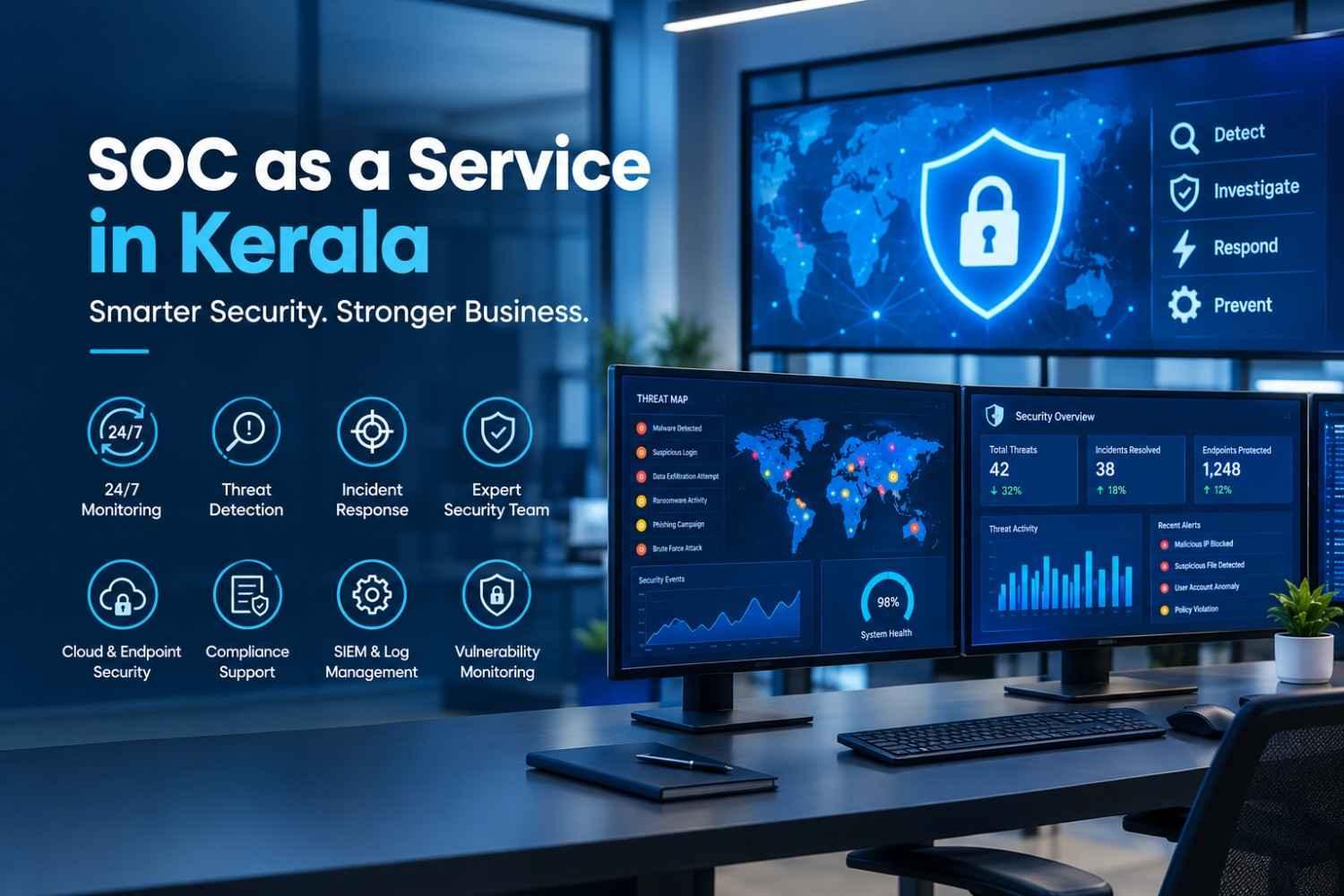



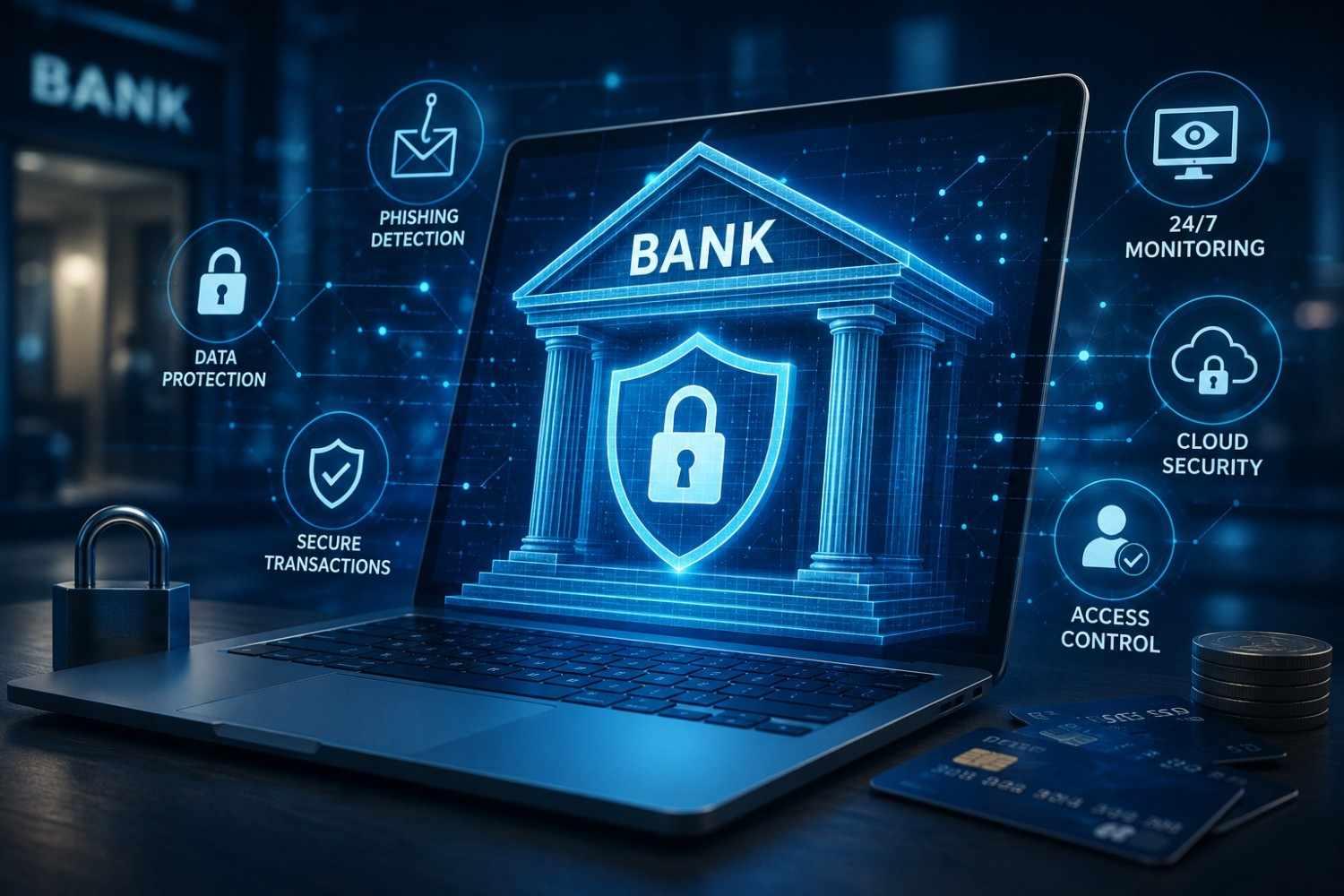
Cybersecurity for Banking and Financial Institutions in Kerala: Risks, Compliance & Best Practices (2026)
The banking and financial sector is one of the most targeted industries for cyberattacks. As digital banking, mobile transactions, cloud adoption, and fintech services continue to grow across Kerala and India, financial institutions face increasing risks from ransomware, phishing, insider threats, and sophisticated cybercriminals. Whether you manage a cooperative bank, NBFC, private financial institution, microfinance company, or fintech startup, protecting sensitive customer information is no longer optional. A single cyberattack can disrupt operations, damage customer trust, result in regulatory penalties, and cause significant financial losses. This is why Cybersecurity for Banking has become a strategic investment rather than simply an IT requirement. With proactive security measures, continuous monitoring, and compliance-driven practices, organizations can safeguard critical systems while supporting secure digital transformation.
What Is Cybersecurity for Banking?
Cybersecurity for Banking is the practice of protecting banks, financial institutions, digital payment systems, customer data, and IT infrastructure from cyber threats such as ransomware, phishing, malware, insider attacks, and data breaches. It combines technologies, security policies, continuous monitoring, compliance, and risk management to ensure secure banking operations and maintain customer trust.
How Does Cybersecurity Protect Banks and Financial Institutions?
Cybersecurity protects banks by combining preventive, detective, and responsive security measures to safeguard financial systems, customer information, and digital banking services. Rather than relying on a single security solution, experts recommend implementing multiple layers of protection that continuously identify and mitigate cyber risks.
An effective banking cybersecurity strategy helps organizations:
- Prevent ransomware, phishing, and malware attacks
- Detect suspicious activities through 24/7 SOC monitoring
- Secure online banking platforms and payment systems
- Protect customer financial data from unauthorized access
- Strengthen cloud security and digital banking applications
- Reduce operational downtime and financial losses
- Support regulatory compliance with RBI and industry standards
- Improve business continuity and disaster recovery capabilities
With continuous monitoring, proactive IT risk assessments, and regular security audits, financial institutions can significantly reduce their exposure to cyber threats while maintaining customer trust and operational resilience.
Why Is Cybersecurity for Banking More Important Than Ever?
The rapid adoption of digital banking has improved customer convenience but has also expanded the attack surface for cybercriminals. Banks process thousands of sensitive transactions daily, making them attractive targets for attackers seeking financial gain or confidential information. According to industry standards, financial institutions should implement a layered cybersecurity strategy combining prevention, detection, response, and recovery.
Organizations without proactive cybersecurity measures face increased risks of:
- Financial fraud
- Data breaches
- Regulatory penalties
- Operational downtime
- Reputational damage
- Business interruption
What Are the Biggest Cybersecurity Risks Facing Banks?
Modern banking environments face a wide range of evolving cyber threats.
Ransomware Attacks
Attackers encrypt banking systems and demand payment to restore access.
Phishing and Social Engineering
Fraudulent emails, SMS messages, and fake websites trick employees or customers into revealing confidential credentials.
Insider Threats
Unauthorized access by employees or third-party vendors can expose sensitive financial information.
Malware and Advanced Persistent Threats (APTs)
Sophisticated malware can remain undetected while collecting sensitive banking data over extended periods.
Cloud Security Risks
Improperly configured cloud environments increase the likelihood of unauthorized access and data exposure.
Third-Party Vendor
Risks Banks often rely on external technology providers, making supply chain security a critical consideration.
What Does Cybersecurity for Banking Include?
A comprehensive banking cybersecurity strategy protects every layer of the IT environment.
Key services include:
- Security Risk Assessment
- Vulnerability Assessment and Penetration Testing (VAPT)
- Network Security Monitoring
- Endpoint Detection and Response (EDR)
- Firewall Management
- Identity and Access Management (IAM)
- Multi-Factor Authentication (MFA)
- Security Operations Center (SOC) Monitoring
- Cloud Security Consulting
- Backup and Disaster Recovery
- Security Incident Response
- Email Security Protection
Experts recommend combining multiple security controls rather than relying on a single security solution.
Why Should Financial Institutions Invest in Cybersecurity for Banking?
Cybersecurity is no longer just about preventing attacks—it supports long-term business continuity and customer confidence.
Improved Data Protection
Customer financial information remains protected against unauthorized access and cyber threats.
Regulatory Compliance
Strong cybersecurity supports compliance with RBI cybersecurity guidelines, information security policies, and industry best practices.
Reduced Downtime
Continuous monitoring identifies issues before they become major operational disruptions.
Stronger Customer Trust
Customers expect financial institutions to safeguard personal and financial information.
Business continuity
Secure backups and disaster recovery planning enable organizations to recover quickly following security incidents.
Which Organizations Benefit from Banking Cybersecurity Services?
Although banks are the primary focus, many financial organizations require enterprise-grade cybersecurity.
These include:
- Commercial Bank
- Cooperative Banks
- NBFCs
- Credit Societies
- Insurance Companies
- Fintech Startups
- Investment Firms
- Payment Service Providers
- Microfinance Institutions
Businesses handling financial transactions should also implement robust cybersecurity practices.
What Are the Best Practices for Cybersecurity for Banking?
Based on industry standards, financial institutions should adopt a proactive security strategy.
Conduct Regular VAPT Assessments
Routite Vulnerability Assessment and Penetration Testing identifies exploitable weaknesses before attackers do.
Implement Multi-Factor Authentication
MFA adds an additional layer of protection beyond passwords.
Encrypt Sensitive Data
Encryption safeguards financial information both during storage and transmission.
Monitor Networks Continuously
24/7 monitoring enables rapid detection of suspicious activities.
Train Employees
Cybersecurity awareness training reduces phishing and social engineering risks.
Update Systems Regularly
Timely patch management closes known security vulnerabilities.
Strenghten Cloud Security
Secure cloud configurations protect digital banking applications and customer data.
What Mistakes Should Financial Institutions Avoid?
Many cybersecurity incidents result from avoidable security gaps
Avoid these common mistakes:
- Delaying software updates
- Weak password policies
- Ignoring employee security training
- Failing to test disaster recovery plans
- Relying solely on antivirus software
- Skipping regular penetration testing
- Poor access control management
- Lack of continuous monitoring
A proactive security approach significantly reduces long-term cyber risk
How Much Does Cybersecurity for Banking Cost?
Cybersecurity investments vary depending on organizational requirements.
Pricing is influenced by:
- Number of users
- Branch locations
- Cloud infrastructure
- Compliance requirements
- Security monitoring scope
- Network complexity
- Managed Security Services
- Disaster recovery requirements
Rather than focusing only on upfront costs, financial institutions should evaluate long-term value, risk reduction, and operational resilience.
Why Choose GKS Infotech?
GKS Infotech provides comprehensive cybersecurity solutions for banks, financial institutions, and businesses throughout Kochi, Kerala, and across India.
Our services include:
- Cyber Security Services
- Cloud Consulting
- Managed IT Services
- VAPT Testing Services
- Security Risk Assessments
- Firewall Management
- Endpoint Security
- Disaster Recovery Solutions
- Network Infrastructure Management
- 24/7 Security Monitoring
Our experienced cybersecurity professionals help organizations strengthen security, maintain compliance, and support secure digital transformation.
Related Cybersecurity Services
Strengthening banking cybersecurity requires more than a single security solution.
Businesses can further improve their security posture by exploring complementary services such as VAPT Testing Services, Managed IT Services, Cloud Consulting Services, Security Risk Assessments, Network Security Management, and 24/7 Security Operations Center (SOC) Monitoring.
You can also learn more about our Managed IT Services, Cloud Consulting Services, VAPT Testing Services, and Cybersecurity Risk Assessment Services to build a comprehensive cybersecurity strategy for your organization.
Conclusion
As digital banking continues to evolve, Cybersecurity for Banking has become essential for protecting financial institutions against increasingly sophisticated cyber threats. From securing customer data and digital payment systems to ensuring regulatory compliance and business continuity, proactive cybersecurity is critical for long-term success.
Whether you operate a cooperative bank, NBFC, fintech company, or financial institution in Kochi, Kerala, or anywhere in India, investing in professional cybersecurity services helps reduce cyber risks while strengthening customer confidence.
Book an appointment with GKS Infotech today and discover how our Cyber Security Services, Cloud Consulting, Managed IT Services, and VAPT Testing solutions can help protect your financial institution with secure, scalable, and future-ready cybersecurity.
FAQs
Is cybersecurity essential for small financial institutions?
Yes. Smaller financial organizations are increasingly targeted because attackers often perceive them as easier targets.
How much does banking cybersecurity cost?
Costs depend on infrastructure size, security requirements, compliance obligations, monitoring needs, and managed security services.
How often should banks perform cybersecurity assessments?
Experts recommend conducting comprehensive security assessments at least annually and after significant infrastructure or application changes
Is VAPT important for banking cybersecurity?
Yes. Regular VAPT testing identifies exploitable vulnerabilities before attackers can compromise banking systems or sensitive customer information
How do I choose the right cybersecurity provider?
Choose a provider with banking expertise, proactive monitoring capabilities, compliance knowledge, experienced security professionals, and ongoing technical support.